%20Cropped.jpg)

From August 23–29, 2026, the Commercial Vehicle Safety Alliance (CVSA) will run its annual Brake Safety Week across the U.S., Canada, and Mexico. For seven days, certified inspectors will pull commercial vehicles in for inspection and any truck with a brake-related out-of-service violation is sidelined until the problem is fixed. This year’s inspection focus is once again brake drums and rotors.
If that sounds like a low-stakes formality, last year’s numbers say otherwise. During the 2025 campaign, inspectors examined 15,175 vehicles and placed 2,296 out of service for brake violations, a 15.1% failure rate, or one in every seven trucks. Brakes are not just a Brake Safety Week problem: during the 2025 International Road Check, brake defects accounted for 41.1% of all vehicle out-of-service violations, the single largest category on the road.
Why Brakes Decide Who Stays on the Road - Brake systems are among the most critical safety components on any commercial motor vehicle. Tire wear affects handling, but stopping an 80,000-pound truck safely is what protects lives and prevents collisions. That is why brake defects remain a persistent focus of roadside enforcement. Fleet Advantage's latest TRUST (Truck Reliability and Usage Safety Tracker) Safety Index reinforces the concern, with brakes accounting for 42% of total vehicle maintenance violations analyzed, second only to tires at 50%.
The data highlights an important pain point for organizations: brake safety is not simply an enforcement-week concern. It is an ongoing maintenance and compliance issue that requires year-round attention.
The 2026 Focus: Drums and Rotors
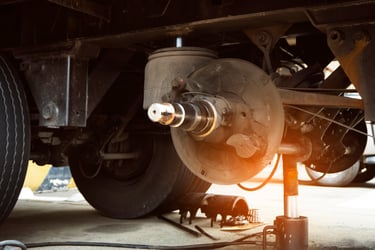 CVSA-certified inspectors will run standard roadside inspections with a targeted emphasis on brake drums and rotors components that are easy to overlook and expensive to ignore. Cracked, rusted, or worn drums and rotors reduce stopping power and can throw hazardous debris into traffic. In last year’s drum-and-rotor focus, inspectors logged 113 violations across 39 vehicles, spanning air disc, S-cam, and hydraulic systems.
What to expect during the week:
- Comprehensive CMV inspections focused on drum and rotor condition
- Immediate out-of-service orders for any brake-related violation
- Performance-Based Brake Testing (PBBT): In select jurisdictions, trucks must hit a minimum 43.5% braking efficiency (25 failed that bar in 2025)
- Data collection and public reporting of brake violation trends
- Education aimed at drivers, technicians, and fleet operators
What Actually Gets Trucks Pulled
The brake issues that lead to out-of-service violations are often preventable with consistent inspection and maintenance. During 2025 Brake Safety Week, the most common brake-related OOS violation was having 20% or more of a vehicle’s service brakes defective, accounting for 1,199 violations. The TRUST data provides another important perspective. While the latest analysis shows an average vehicle out-of-service inspection rate of 13.23% for top private fleets, which is well below the 22.26% national average, brakes still accounted for 42% of total vehicle maintenance violations analyzed. The findings reinforce why fleets cannot become complacent about brake maintenance, even when overall out-of-service performance is strong.
Drivers – Pre-Trip & Post-Trip Reminders:
- Inspect all visible portions of brake pads, drums, and rotors
- Look for oil, grease, or contamination if found, take the vehicle out of service
- Perform a brake hold test: Try moving the vehicle with brakes applied. Any movement means failure
- Run a brake-hold test: with brakes applied, try to move the vehicle - any movement is a failure
- Document everything in the DVIR and report issues to the carrier immediately
 Maintenance Personnel – PM Service Focus:
- Check for missing lining material, exposed rivets, or scoring
- Confirm pad/shoe clearance meets OEM standards
- Inspect for cracks, voids, or signs of rust jacking
- Address heavily rusted rotors or metal-to-metal wear immediately
Drums and Rotors: 8 Things to Catch Before an Inspector Does
- Inspect visible drum and rotor surfaces on every pre- and post-trip
- Look for cracks or broken pieces in the rotor friction surface
- Check for structural cracks that reach the drum’s outer edge, or missing pieces
- Treat heavy rust across a disc’s entire friction surface as a red flag, it often signals an inoperative brake
- Grooved rotors mean metal-to-metal contact: the pads are worn and need replacing
- Measure rotor thickness exposed center vents mean the rotor is dangerously worn
- Follow the brake manufacturer’s specs and procedures on every repair
- Record findings in the DVIR and notify the carrier promptly
The Bottom Line - Brake violations are not just paperwork, they are the leading cause of trucks being pulled off the road and a real danger to everyone around them. Staying ahead of them prevents accidents and saves lives, avoids downtime, citations, and CSA score damage, and keeps your fleet’s safety record strong. Use the run-up to August 23 to train your teams, refresh inspection routines, update maintenance documentation, and reinforce a safety-first culture, so when an inspector waves your truck in, the result is a non-event. Do not wait for enforcement week to find a problem. Build the inspection now.
For official resources, inspection guides, and reporting tools, visit the CVSA Brake Safety Week page: CVSA’s Brake Safety Week Scheduled for Aug. 23-29